Scratch Stock
Status : Book Study
A scratch stock is a traditional hand woodworking tool used to scrape decorative profiles—such as beads, flutes, cockbeading, or custom mouldings—directly into the edge or face of a piece of timber.
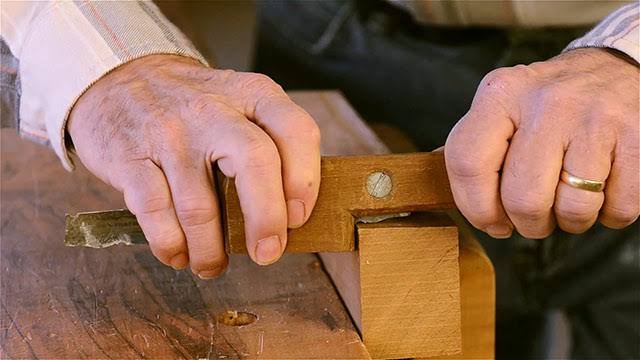
1. How It Is Constructed
A scratch stock is simple and almost always shop-made out of scrap material:
- The Body (Stock): Typically an L-shaped block of hardwood with a saw kerf (slot) cut into it. The step of the “L” acts as a built-in fence that registers against the edge of the workpiece.
- The Cutter (Cutter Plate): A small piece of hardened steel—often recycled from a worn-out handsaw blade or card scraper—filed to match the negative profile of the desired moulding.
- Clamping Mechanism: Screws or bolts pinch the kerf together to hold the steel blade tightly in place.
2. How It Works
Unlike a hand plane or router bit that cuts wood chips, a scratch stock operates by scraping:
- The cutter is set to project slightly past the wooden fence.
- The woodworker holds the fence flush against the edge of the board and pulls or pushes the tool along the grain using light pressure.
- Over repeated passes, the steel scraper removes thin, dust-like shavings, gradually wearing the shape of the cutter into the wood until the full profile is formed.
3. Key Advantages in the Workshop
- Custom Profiles: Allows you to reproduce obscure historical mouldings or invent custom details without buying expensive router bits or moulding planes.
- No Tear-Out: Because it scrapes rather than slices, it handles tricky or highly figured grain (like tiger maple or walnut burl) without tearing the wood fibers.
- Minimal Setup: Ideal for short moulding runs or adding small decorative accents to drawer fronts and table aprons without setting up power machinery.
My Workbench Notes: Unlocking Custom Profiles with the Scratch Stock
I first encountered a scratch stock during my visit to Derry’s workshop. Derry gave me a quick breakdown of how he constructs them and pulled out a whole box filled with different profiles he’d made over the years. At the time, I didn’t fully grasp just how useful or essential this simple tool could be until I started reading more into traditional joinery and surface detail.
The biggest “lightbulb moment” for me was discovering that you don’t need specialised equipment or commercial bits to make them—you can easily file custom cutters right out of an old card scraper or saw blade. Seeing how much control it offers for fine decorative work made a lasting impression. I’m confident I’ll hit a point in a future project where a standard router bit just won’t cut it, and I’ll be making one of these from scratch.
Key Takeaways & Lessons Learned
- Zero-Barrier Customization: Instead of buying expensive router bits or specialized moulding planes for a short run, you can shape a custom profile out of scrap card scraper steel using basic needle files.
- Tear-Out Solution: Because it scrapes rather than slices, the scratch stock is a go-to fix for adding decorative edges (like beads or cockbeading) to tricky, highly figured grain without risking tear-out.
- Low-Tech, High Precision: A box of shop-made scratch stocks takes up almost no space and provides an infinite library of custom edge treatments that give hand-made furniture a distinct, authentic touch.