Acclimatisation
Status : Bench Tested
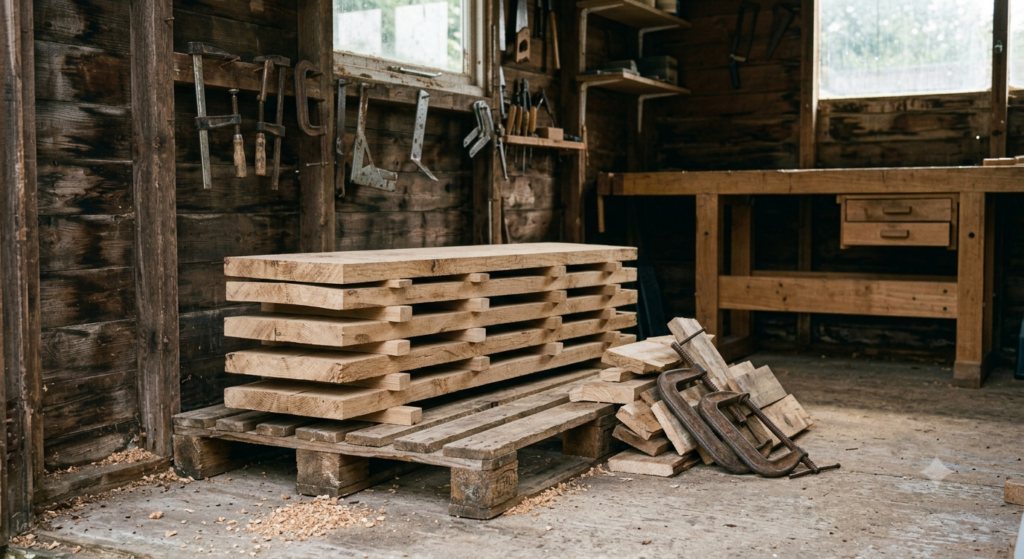
The process of allowing fresh timber to sit in your workshop space for several days or weeks before cutting. This lets the wood adjust its moisture content to the ambient humidity of the room, preventing unexpected warping, twisting, or cupping after you make your precision cuts.
My Workbench Note: First Impression
Most of my early small projects were built using hardwood off-cuts from Surrey Timbers, but for a couple of builds, I picked up PAR (Planed All Round) timber from B&Q. I spent ages digging through rows of stock just to find the straightest boards with minimal knots. Within a day or two of bringing them home, one of the pieces developed a noticeable twist. My project didn’t require high accuracy, so I worked through it, but it was a clear lesson in timber movement. Bringing timber straight into a new environment without letting it rest and acclimatise first will quickly ruin even the straightest board off the shelf.
Quick Beginner Takeaways
- Bake Rest Time into Your Schedule: Always budget a few extra days between buying your timber and making your first cuts to allow the boards to settle and adjust to your workshop’s ambient conditions.
- Protect Timber During Transit & Storage: Moisture and sudden heat shifts cause rapid warping—keep your boards strictly shielded from rain, direct sunlight, and outdoor weather while transporting and storing them.
- Verify with a Digital Moisture Meter: A cheap digital moisture meter takes out the guesswork, letting you check board surface readings to confirm when moisture levels have actually stabilized.