Annual Rings (Growth Rings)
Status : Bench Tested
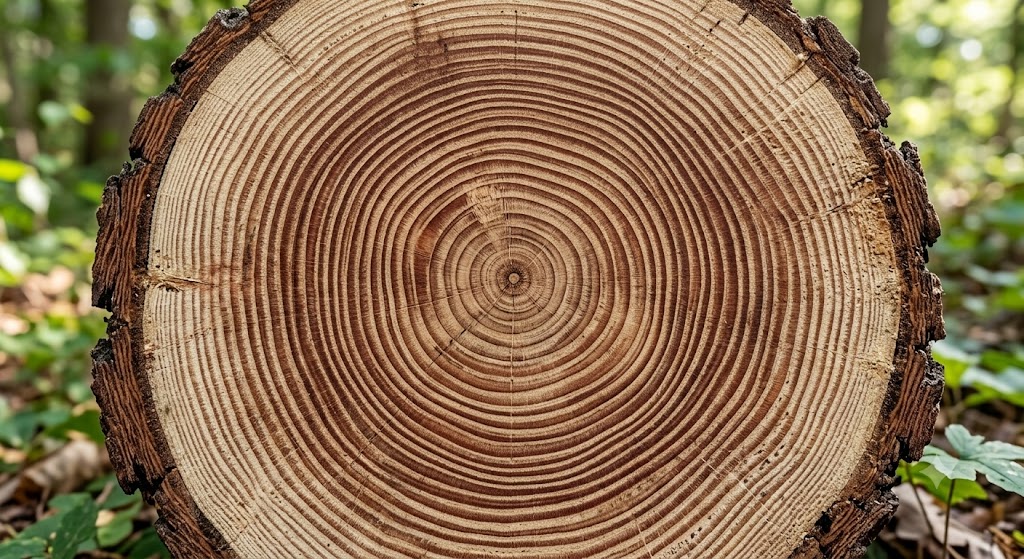
Concentric rings visible on end grain representing one year of growth. Their angle shows how the board was milled and indicates how stable it will be under humidity changes.
My Workbench Note: First Impression
We all grew up looking at textbook diagrams of growth rings drawn as perfect, neatly concentric circles. Taking timber to the workbench quickly shatters that clean theory. Depending on whether a log is plain-sawn or quarter-sawn, those rings transform from sweeping cathedral arches into tight, parallel stripes. Factor in how live branches create knots, how the grain swerves and flows around natural defects, and how juvenile heartwood behaves compared to outer sapwood, and reading growth rings becomes less about counting a tree’s age and more about mapping its structural personality and stability before making a single cut.
Quick Beginner takeaways
- Textbooks vs. Reality: Growth rings are rarely neat concentric circles; logs shift, warp, and flow based on how the tree grew and how the mill converted it (plain-sawn vs. quarter-sawn).
- Knots & Flow: Every branch creates a knot that diverts the surrounding grain, creating localized tension and changing how cutting tools interact with the board.
- Grain Dictates Tool Direction: Planing against the grain tear-out map will ruin a surface instantly—reading the ring lines on the edge of a board tells you which way to push your plane.