1/32 Inch (1/32″)
Status : Book Study
A micro-imperial unit of measurement equal to 0.03125 inches (0.79375mm), representing the standard threshold of extreme precision in manual woodworking, fine joinery adjustment, and precision machining.
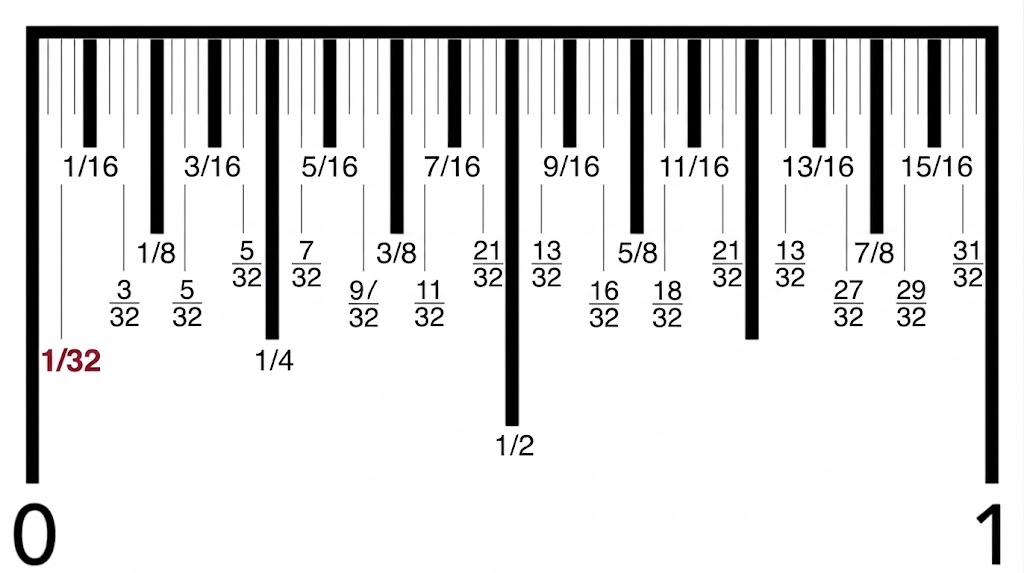
Note for Metric Woodworkers: In metric workshops across Europe and the UK, this measurement is typically rounded to 0.75mm.
My Workbench Note: First Impression
Watching US-based woodworking channels, I constantly ran into fractional imperial measurements like 1/32, 1/16 — and to be honest, it flustered me every time. Having grown up strictly in the metric world, watching someone casually call out 13/32″ felt like an alien math test rather than straightforward woodworking.
I decided to do a bit of research to break down how these imperial rules actually work, visually mapping out how an inch gets divided down from quarters and eighths all the way to thirty-seconds. For anyone else in the metric boat trying to make sense of imperial content online, I hope this breakdown helps demystify the numbers.
Will I ever adopt this system in my own workshop? Very unlikely. The rules, steel squares, and tape measures on my bench are firmly metric, but at least now I can follow along without reaching for a calculator every five seconds.
Quick beginner takeaways
- Metric Simplicity vs. Fractional Logic: Metric relies on clean base-10 increments (1 mm, 10 mm), whereas imperial woodworking relies on repeated halving (1/2″, 1/4″, 1/8″, 1/16″, 1/32″).
- Line Height Matters: On an imperial ruler, the length of the hatch mark tells you the fraction size—the tallest line is 1/2″, the next is 1/4″, followed by 1/8″, 1/16″, and the tiny ticks are 1/32″ (0.79 mm).
- Odd Numerators Only: Fractions on a ruler are always reduced to their lowest terms, so thirty-seconds marks only show up as odd numbers (1/32″, 3/32″, 5/32″, etc.).