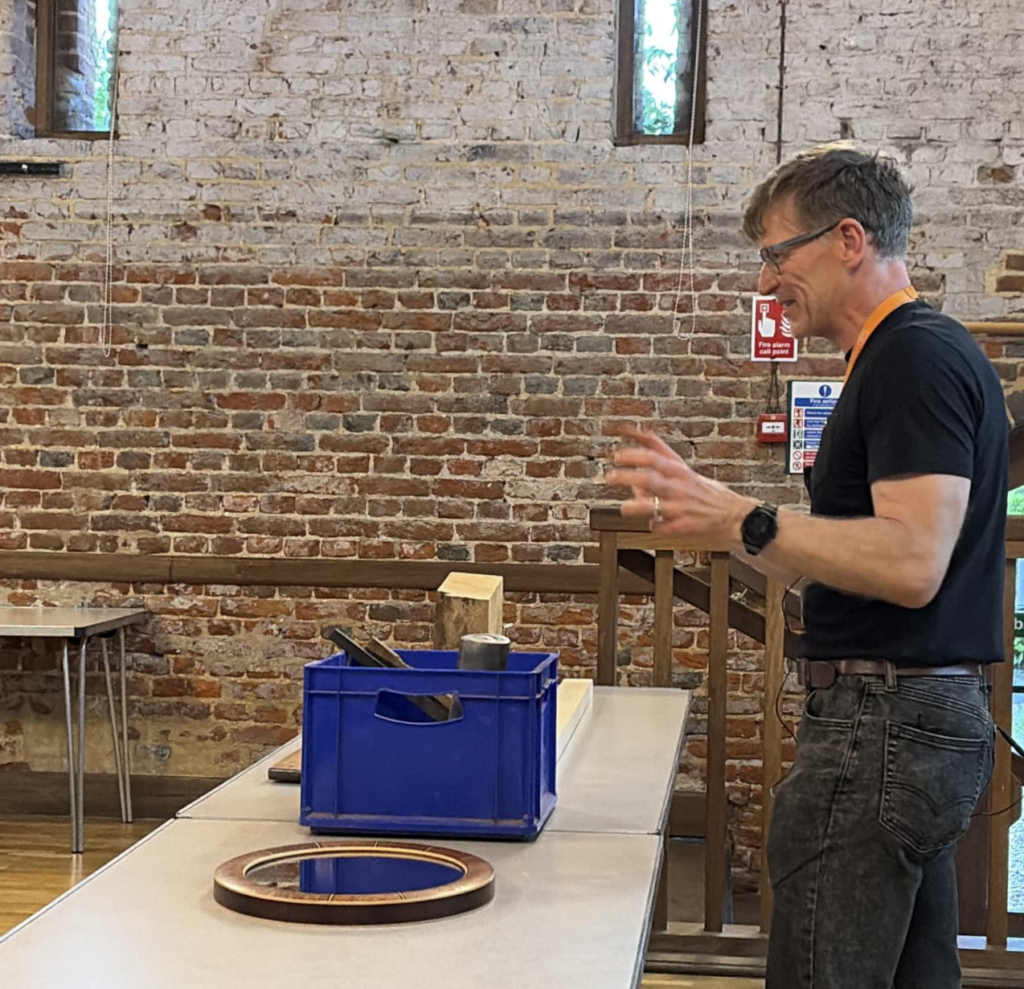
Following his brilliant presentation at the SFWW Mirror Project event in April 2026 (image below), I had the distinct honour of being invited to spend an hour with Derry Walker —a veteran restorer and true master keeper of the craft—at his personal workshop and studio.
Derry presenting his mirror project at SFWW meeting in April – file photo taken from SFWW Instagram account
What was meant to be a brief visit quickly turned into an immersive masterclass in material history, preservation philosophy, and traditional woodworking techniques.
Stepping Into a Master’s Sanctuary
Walking into Derry’s workshop is like stepping into a living museum of woodworking history. The space is dense with history—a lifetime accumulation of specialized hand tools, vintage fasteners, walls of clamps in every conceivable size and truck (bucket) loads of screws and active restoration projects sitting in his workshop.
We spent time navigating his specialized timber storage, which holds rare, long-cured boards collected over decades. Seeing how he organizes, selects, and respects these historical woods was an education in itself.
(Note to self: in the future, I really need to take more photographs! I keep getting so absorbed in the moment that I miss great opportunities to capture these incredible spaces.)
Deep-Dive into Traditional Techniques & Toolmaking
Our technical conversations covered the finer details of conservation work—the kind of knowledge that you rarely find on the net:
Traditional Adhesives: We dove into the chemistry, preparation, and practical application of traditional hide glues and fish glues. Derry explained why these reversible adhesives remain superior for antique restoration, allowing future conservators to repair a joint without damaging original fibers.
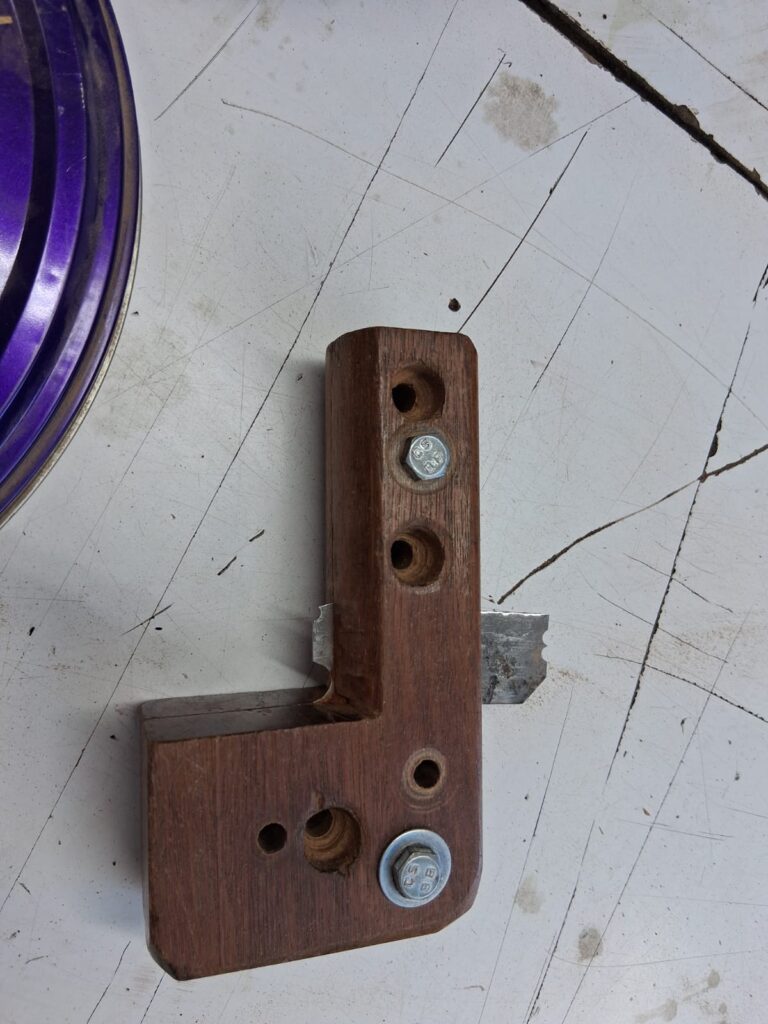
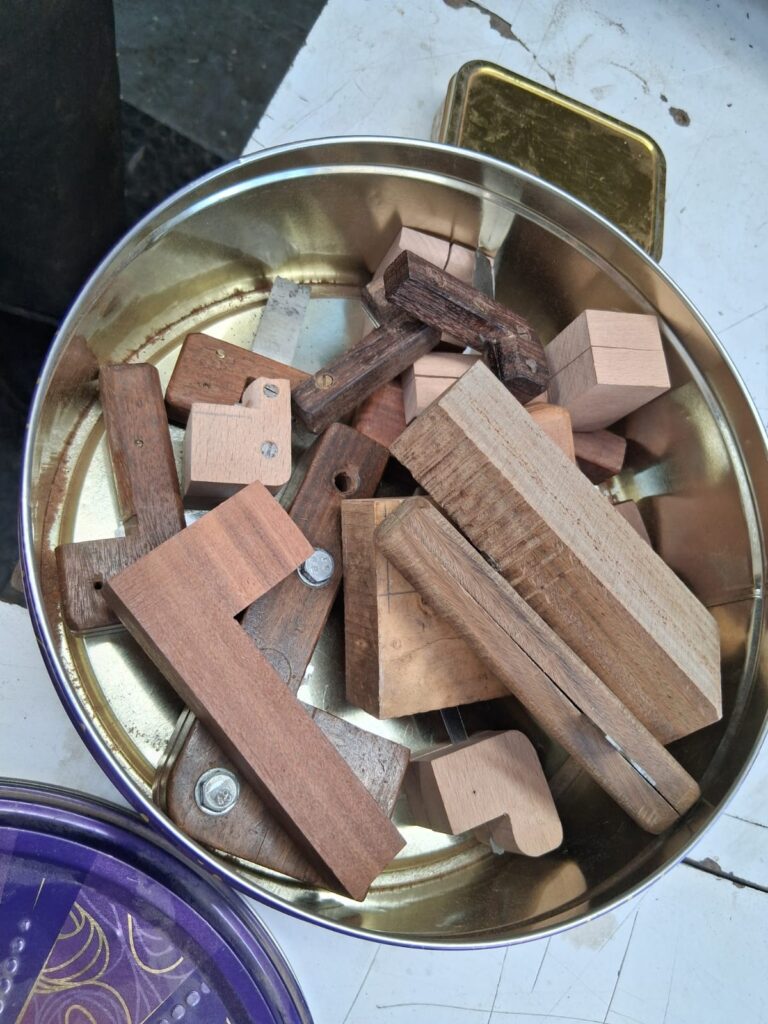
Bespoke Micro-Tools: One of the highlights was inspecting the custom micro-tools Derry crafts himself. Using worn-out cabinet scrapers, he shapes and grinds bespoke miniature chisels and profiles specifically designed to reach into delicate relief carvings and tight moldings.
Shop-made micro-tools crafted from old cabinet scrapers.
The Reality of the Trade
Beyond the technical skills, Derry spoke candidly about the changing landscape of antique restoration. We discussed the economic shifts that make professional restoration harder to sustain today, as well as the increasing scarcity of sourcing genuine, period-accurate timber species required for seamless repairs.
Hearing these reflections from someone who has dedicated his life to preserving material history gave me a whole new appreciation for the responsibility involved in restoration.
Lessons Learnt / Key reflections from the visit
Leaving Derry’s studio, a few core lessons really stuck with me:
Reversibility is Everything: True restoration isn’t just about making something look whole today; it’s about making sure your fix can be safely undone by someone 100 years from now.
Make the Tool You Need: If a commercial tool doesn’t fit the cut, make one. A piece of scrap steel can become the exact tool needed to save an antique carving.
Respect the History: Every mark, finish, and piece of wood in an antique tells a story—our job as woodworkers is to listen before we touch.
It was a true privilege to learn directly from a veteran of the trade. I want to extend a huge, heartfelt thank you to Derry for so generously sharing his precious hour with me—his time, wisdom, and passion made it an absolutely unforgettable experience.