Shooting board
Status : Bench Tested
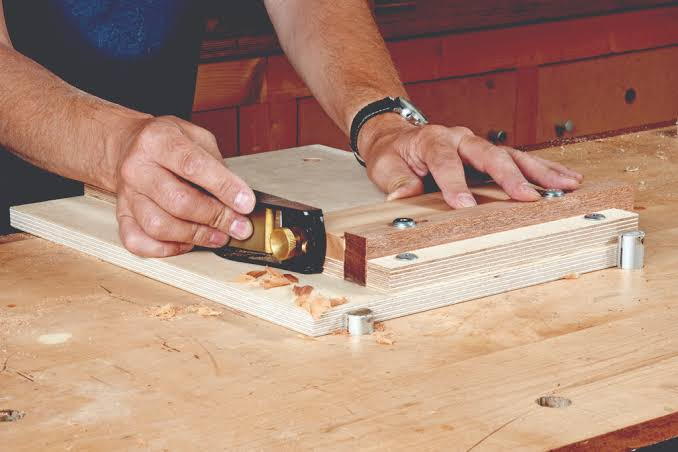
A shooting board is a specialized workshop jig used alongside a hand plane to square, true, and micro-adjust the end grain or mitres of a board with extreme precision.
My Workbench Notes:
My first hands-on experience using a shooting board was during the tray project. The tray sides had dovetail joints, and I needed to clean up the edges and square the ends.
Using the jig for the first time was definitely a daunting task. Working a hand plane on its side while keeping firm pressure on both the plane body and the workpiece takes coordination, and it takes some time to get used to the technique. But once I found the groove, it worked at the end—giving a dead-square, glass-smooth edge that would be nearly impossible to achieve freehand.
Quick Beginner Takeaways
Let the Jig Do the Squaring: The fence and runway lock the plane at a perfect 90° angle. Focus on keeping the plane flat on the track rather than trying to force the cut.
Keep the Blade Razor Sharp: Planing end grain puts maximum stress on a cutting edge. A dull iron will crush wood fibers or cause severe tearout instead of taking clean, whisper-thin shavings.
Support the Exit Grain: Always keep the workpiece pressed tightly against the rear fence. Without proper backing at the far edge, the exiting blade will blow out or chip the back corner of your board.
Micro-Adjustments Over Heavy Cuts: Set the hand plane iron for a paper-thin depth of cut. A shooting board is built for fine fitting and micro-trimming, not heavy stock removal.