Hand drill
Status : Bench Tested
A compact, hand-powered rotary tool utilizing an eggbeater gear mechanism to drive small drill bits with high control, making it ideal for accurate pilot holes and delicate woodworking without the risk of splitting stock.
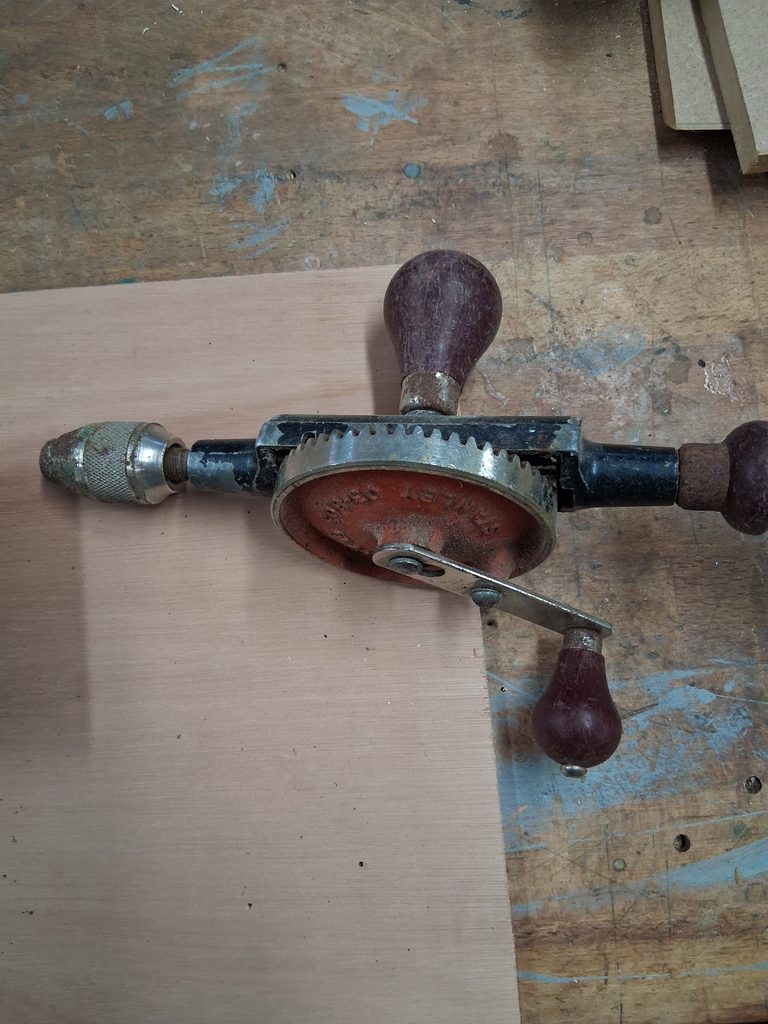
My Workbench Note: First Impression
I first put a hand drill to use on my micro-woodworking pendant project, where I needed to bore a tiny 1–1.5 mm hole through fragile American Walnut. Using a heavy power drill on a finished, delicate piece felt far too risky, so I opted for a traditional hand-powered drill instead.
Setup was simple, and the gear control and tactile feedback were outstanding. However, I made a rookie mistake by trying to drill directly through the brass inlay without prepping the surface. Because the brass was so much harder than the surrounding timber, the drill bit skated right off the wire after a few turns and plunged into the soft walnut beside it, leaving the hole off-center! Once re-aligned, the hand drill gave me the slow, precise control needed to finish the bore without splitting the pendant. It’s an indispensable tool for micro-scale work, and I’ll definitely be adding one to my permanent kit when I find one at a good price.
Quick Beginner Takeaways
- Power Drills Risk Micro-Work: High-speed power tools can easily blow out thin timber or rip a tiny pendant out of your hands; hand-powered drills give you the exact tactile feedback needed for fragile stock.
- Metal Deflects Drill Bits: A steel twist bit will always take the path of least resistance—skating off hard brass wire into the softer surrounding wood if you don’t prep the surface first.
- Always Starter-Punch Metal: Before drilling into or near metal inlays, use a scratch awl or diamond burr to punch a deep starting divot to anchor the drill bit tip.
- Control Over Speed: When working at a micro scale, slow and deliberate manual rotations prevent tear-out and protect hours of delicate joinery or inlay work.