Bench Grinder
Status : Bench Tested
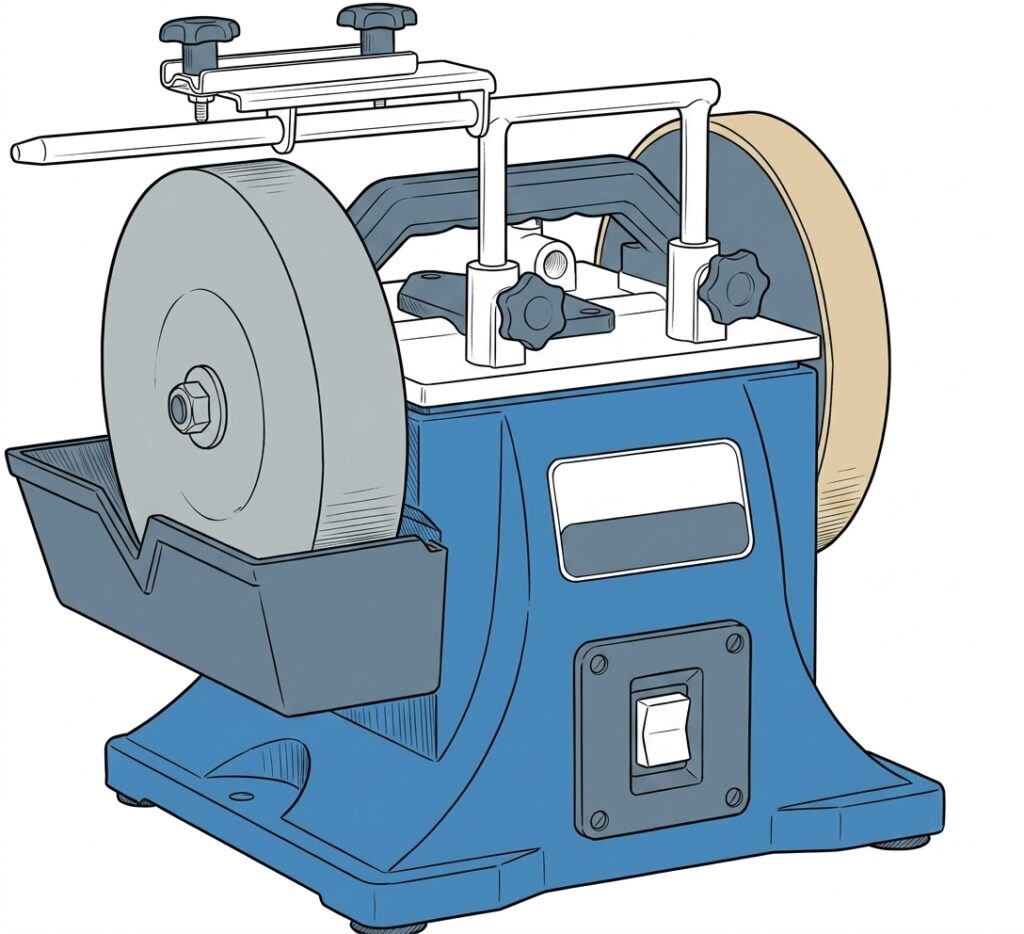
A bench-mounted power tool fitted with two spinning abrasive wheels (often of different grit sizes). In woodworking, it’s primarily used for high-speed coarse grinding—reshaping damaged tool edges, restoring primary bevels on chisels and plane blades, or squaring up lathe turning tools before moving to fine sharpening stones.
My Workbench Note: First Impression
It didn’t take long on my first workshop day to realize that chisels don’t stay sharp forever—especially when handled with total beginner brute force! After just a few hours of chopping, our pristine chisel edges were ruined. Marcus stepped in and introduced us to the bench grinder.
I’d seen grinders online, but this one came with its own charm: a leaky built-in water container that required constant refills. Armed with Marcus’s breakdown on bevel angles and guide rails, we spent a fun evening learning the ropes, making every classic beginner mistake—from grinding crooked edges to slipping off angle—before finally getting it right.
Quick Beginner Takeaways
- Coarse Grinding vs. Sharpening: A bench grinder isn’t meant to give you a razor-sharp, polished edge. It’s for heavy shape work (restoring a bevel or removing deep nicks). The final razor edge still comes from your sharpening stones or honing guide – we were trained to use japanese wet-stones without a honing guide. As a beginner, personally I would suggest a honing guide.
- Patience : Good amount of patience required. Chisels are made of high-carbon steel and it does take time to get the same sharpened. You need to patiently work to get the angle and depth right.