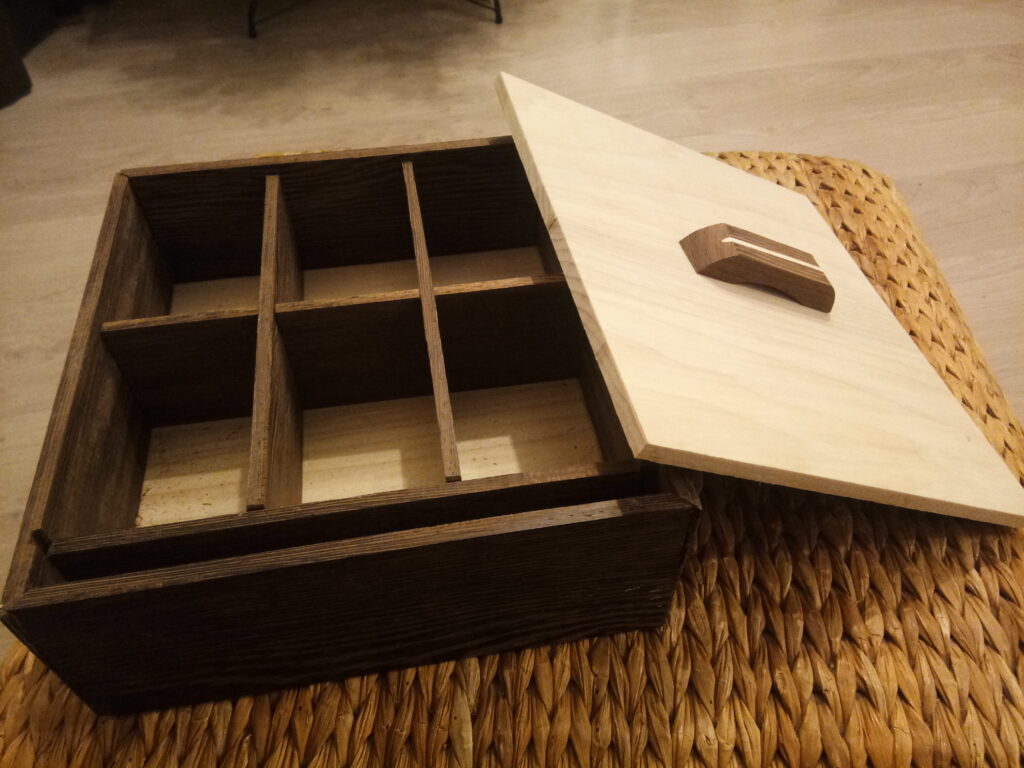
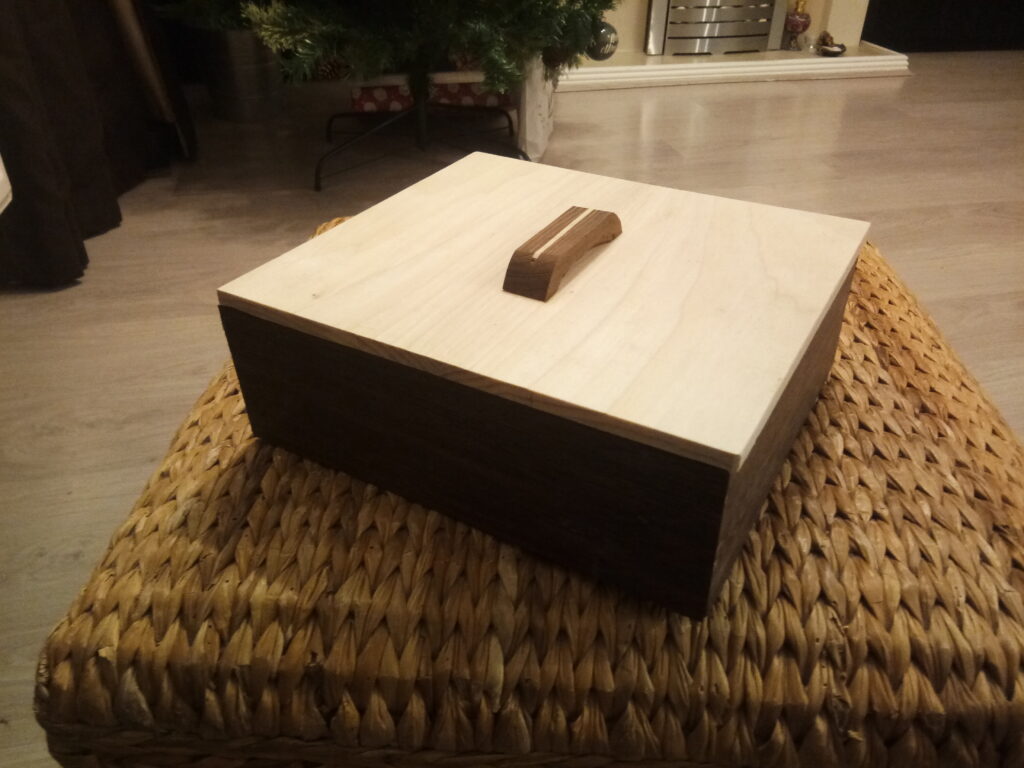
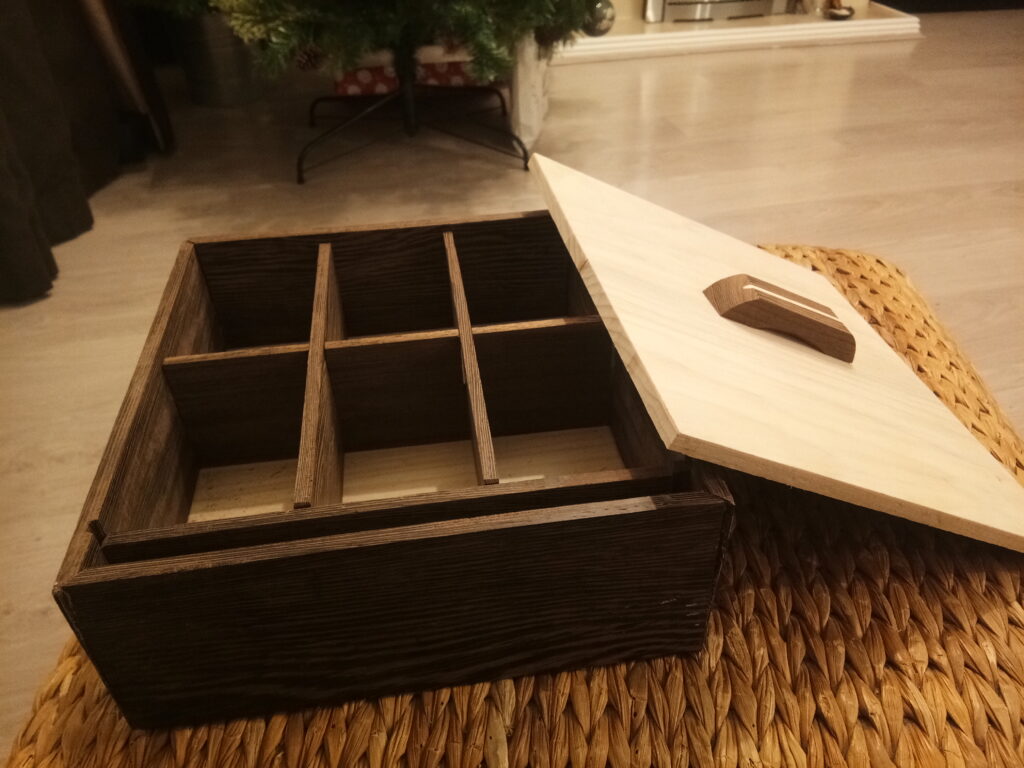
Marking the very beginning of my woodworking journey in 2024, this spice box was the culmination of an intensive 3-to-4-month foundational training period. Designed with functional aesthetics in mind, it features six internal storage slots alongside a dedicated recess for a small spoon. The design relies entirely on a high-contrast palette, juxtaposing the deep, rich tones of Wenge wood against the clean, light grain of Poplar. Every miter joint on this piece was cut entirely by hand—a humbling exercise in patience and tolerance control.
Meeting the Band Saw and Planer/Thicknesser was a total eye-opener. I’d walked into Surrey Timber yard and bought two rough blocks of wood—one Wenge, one Poplar—naively assuming you just bought timber ‘to spec’ and went straight to building. I had no idea rough wood needs to be processed first! Standing in front of those machines for the first time made me realise just how much prep work happens before a single joint is cut.
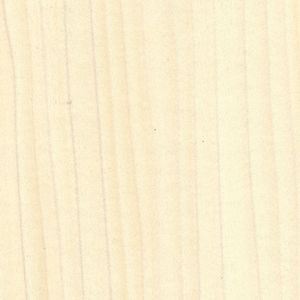
The build quickly exposed me to the harsh realities of material selection and the massive gap between watching an expert like Marcus, or a YouTube tutorial, and executing the work with your own hands. The Wenge wood, while boasting a fantastic grain pattern, proved to be an absolute beast to process. It was incredibly tough, splintered constantly, resisted clean cuts on the band-saw, and produced a relentless volume of fine, dark dust during sanding. In stark contrast, the Poplar was incredibly easy to process, but its pristine white color made it unforgiving to amateur mistakes. Wenge dust quickly found its way into the Poplar grain, tinting the wood, and I struggled with visible glue spots on the final assembly.
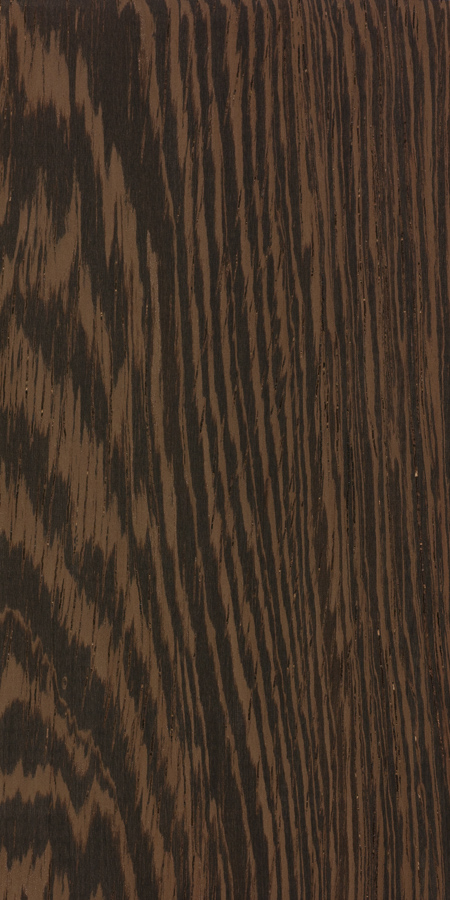
Initially, I had hoped to tackle traditional dovetails, but the sheer toughness and brittle nature of the Wenge forced me to pivot to a miter joint layout. Yet, even that proved to be a formidable technical challenge. It required a sizable, exhausting effort to get the hand-cut miters properly aligned and closed (or at least, almost perfectly done). While looking back reveals the minor imperfections of a first build, the box remains a proud, highly functional fixture in our family kitchen today—standing as a durable, hard-fought testament to where my passion for making began.
In hindsight, choosing a coloured timber for a spice box was a definite design misstep. Poplar is naturally prone to picking up discolouration and staining directly from the spices it holds—a classic “bad choice” in terms of long-term utility. But that is precisely the kind of practical wisdom you only gain by actually building things and living with the results.
A Dedication to the Craft > (Pictured: My tutor, Marcus Mauger (*)) > None of this would have been possible without my mentor, Marcus Mauger. Over those 3 to 4 months of training, Marcus didn’t just teach me how to handle wood—he introduced me to the soul of the craft itself. His guidance, patience, and standards for precision laid the groundwork for everything I build today. I owe my foundation as a maker to his mentorship.
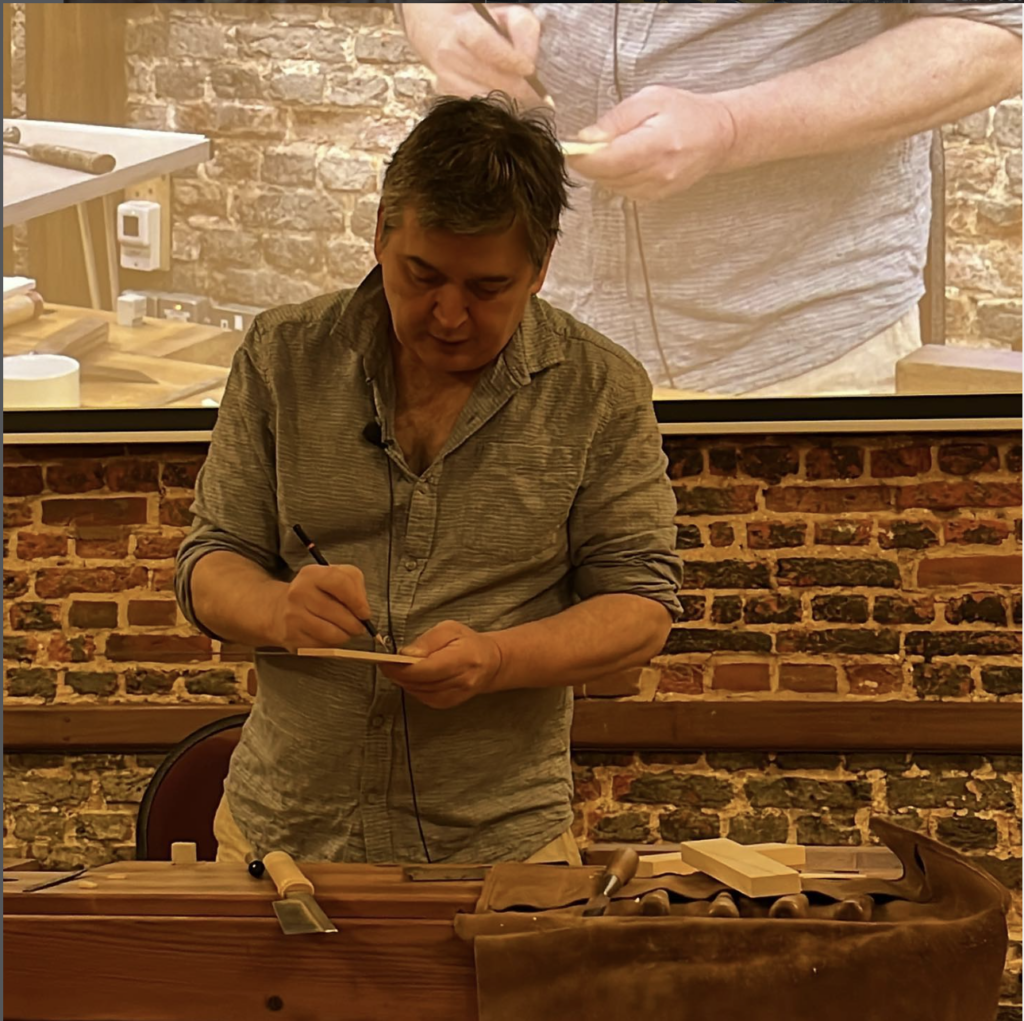
(*) Screenshot from “Marcus Mauger’s presentation at SFWW” in Mar’24. Used under fair use for commentary
Lessons Learnt
The Gap Between Theory and Execution
Watching tutorials or expert demonstrations (like on YouTube) can create a false sense of ease. Hands-on execution reveals the real-world skills, patience, and tight tolerance control required to achieve precise results, such as cutting hand-miter joints accurately.
Difficulty in Processing Tough Hardwoods (Wenge)
Wenge proved to be extremely difficult to work with. Its high density and brittle nature caused it to splinter constantly and resist clean cuts on the bandsaw. Furthermore, sanding Wenge produced a relentless amount of fine, dark dust that was difficult to manage.
Cross-Contamination Between Contrasting Woods
Pairing a very dark wood (Wenge) with a very light wood (Poplar) introduces severe cleaning and finishing challenges. The dark Wenge dust easily migrated into the pristine grain of the light Poplar, causing permanent tinting and discoloration.
Visibility of Amateur Finishing Mistakes
Light-colored woods like Poplar are highly unforgiving when it comes to assembly errors. Any minor imperfections, such as squeeze-out or visible glue spots, stand out starkly against the clean grain and are difficult to hide on the final piece.
Pivot in Joinery Due to Material Limitations
Initial plans to cut traditional dovetails had to be abandoned because the Wenge was too tough and brittle. Switching to hand-cut miter joints presented its own massive technical challenge, requiring significant physical effort and alignment work to get the joints to close properly.
Poor Material Selection for Functional Use
Using Poplar for a kitchen spice box was a practical design oversight. Poplar is naturally prone to staining and absorbing discoloration directly from the spices stored inside, demonstrating the importance of choosing materials based on long-term utility rather than just initial visual aesthetics.